BTS ARIRANG meaning: the 130-year recording behind it
ARIRANG is a Korean folk-song family shaped by separation, reunion and shared memory. See how BTS linked its 2026 album to an 1896 recording made in Washington.
Contents
Arirang has no neat one-word translation. It names a living family of Korean folk songs shaped by separation, reunion and shared memory. BTS’s 2026 campaign connects that name to the group’s full return, a Korea-to-the-world message and the earliest known Arirang recordings. Read together, those choices frame reunion and identity; BIGHIT has not published one definitive member explanation of the title.
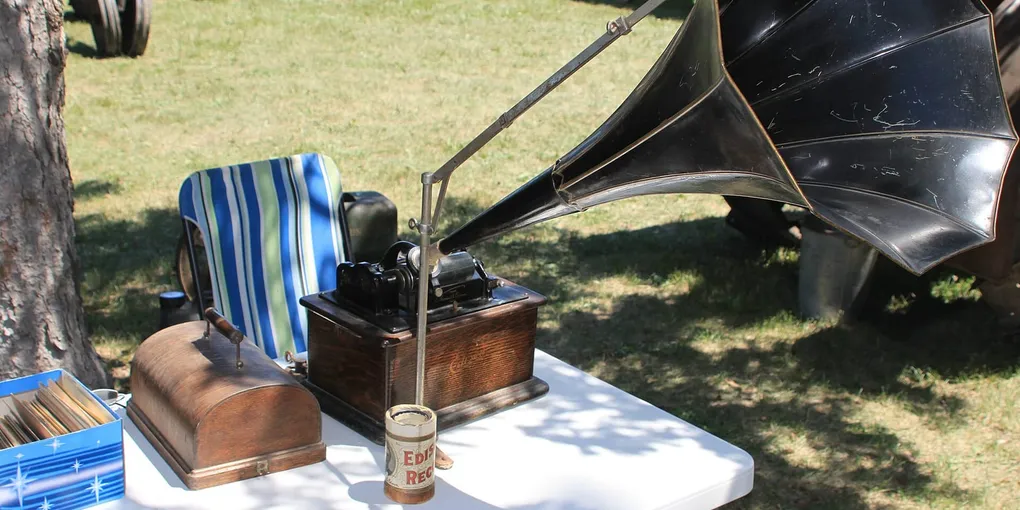
The timing gives the title another layer. July 24, 2026 marks exactly 130 years since ethnologist Alice Fletcher recorded three Korean students in Washington, D.C. The surviving wax-cylinder collection includes three takes of Arirang and holds the earliest known recordings of Korean music, according to the Library of Congress. BTS made that episode central to an animation trailer for the album campaign.
- 3,600
- estimated South Korean variationsacross about 60 versions
- 3 takes
- preserved from Washingtonrecorded July 24, 1896
- 14 tracks
- on BTS’s ARIRANGreleased March 20, 2026
- 130 years
- from the cylinders to today1896–2026
What does Arirang actually mean?
The most accurate answer is that Arirang does not have one confirmed literal meaning. Korea.net describes the meaning of the recurring word as unclear, while the verses and even the melody change by region and singer. The National Folk Museum of Korea notes that the beginning of the song remains uncertain despite numerous origin theories.
That uncertainty matters. A confident one-line etymology may describe an interpretation or a particular verse, but it does not define the whole tradition.
The Academy of Korean Studies uses “Arirang” both for a representative tune and for the much larger song family that includes regional traditions such as Jeongseon, Jindo and Miryang Arirang. For the Republic of Korea tradition, UNESCO cites an expert estimate of about 3,600 variations grouped into roughly 60 versions.
For a North American listener, the closest comparison is not a national anthem with one authorized score. Think of a folk standard that communities keep rewriting: familiar enough for a crowd to join, flexible enough to carry a new story.
Why are there thousands of Arirang songs?
Variation is part of the form. UNESCO describes Arirang as a collective creation passed through ordinary people, with a simple structure that invites new verses, imitation and group singing. The thousands of estimated variations are not accidental duplicates; adaptation belongs to the tradition itself.
That range matters because English-language explainers often reduce Arirang to sorrow or the Korean idea of han. Grief belongs in the tradition, but it does not own it. UNESCO’s Republic of Korea listing emphasizes empathy across communities, while its Democratic People’s Republic of Korea listing describes versions expressing leaving and reunion, sorrow and joy, and happiness.
The song also crosses the peninsula’s present-day border. UNESCO added the Republic of Korea’s Arirang tradition to its Representative List of the Intangible Cultural Heritage of Humanity in 2012 and the Democratic People’s Republic of Korea’s tradition in 2014. The listings are separate. The shared song predates that political division.
| Date | What happened | Why it matters |
|---|---|---|
| July 24, 1896 | Alice Fletcher recorded three Korean students singing onto six wax cylinders in Washington, D.C. | The collection holds the earliest known recordings of Korean music, including three Arirang takes. |
| 2012 | UNESCO inscribed Arirang from the Republic of Korea. | The decision recognized community rewriting and regional diversity as strengths of the tradition. |
| 2014 | UNESCO inscribed Arirang from the Democratic People’s Republic of Korea. | The two listings show a cultural line older than the divided peninsula. |
| March 20, 2026 | BTS released the 14-track album ARIRANG. | The release placed a Korean folk-song title on BTS’s full-group return; BIGHIT describes the album as presenting the members’ identities and future direction. |
What happened in Washington on July 24, 1896?
Alice Cunningham Fletcher recorded Jeong-sik Ahn, He Chel Ye and Son Rong in Washington on six wax cylinders. The American Folklife Center says the session took place at Fletcher’s home, on land now occupied by the Library of Congress’s James Madison Memorial Building.
The collection includes three Arirang takes. One lasts only about ten seconds and may be a false start. That small mistake makes the archive feel human: before editing software, a restart stayed on the object.
The recordings predate the next documented Korean song recording by 11 years. They also complicate the usual story of Korean music “arriving” in America in the K-pop era. Korean voices were already being preserved in Washington more than a century before BTS’s debut.
The group’s animation trailer offers a modern reimagining: it casts BTS’s seven members as Korean students at Howard University, then shifts into animation to follow the cylinder story. The Library of Congress confirms that the boxes and recordings shown in the campaign draw from its Alice C. Fletcher collection.
How does BTS use Arirang on the album?
BIGHIT MUSIC calls ARIRANG BTS’s fifth album and the group’s first in three years and nine months. Its official album page says the members took part throughout writing and production and used 14 tracks to set out their direction after the full-group break.
The link to the folk song is audible at the start. The opening track, “Body to Body,” works the traditional Arirang melody into a modern production, as both the Library of Congress and the Associated Press note. The album campaign then extends that link through the cylinder animation, Korean visual motifs and the phrase “Born in Korea, playing for the world.”
Speaking about the live “Body to Body” performance—not the choice of album title—j-hope told Weverse Magazine that the Arirang section represents people setting aside their differences and coming together through love. That explanation fits the song’s communal use without pretending Arirang has only one emotion or political message.
There is a limit to the claim. ARIRANG is not a collection of 14 folk-song arrangements, and the official materials do not say every song encodes a historical reference. The title can be read as a frame: a familiar Korean form about distance and return, placed on a group resuming work together after a long separation. That is an interpretation of the evidence, not a quoted explanation from a member.
That reading is more precise than calling the album a generic “return to roots.” UNESCO’s Republic of Korea listing describes a simple form that invites improvisation, imitation and new lyrics. A pop group changing the sound while retaining a recognizable melodic thread is consistent with that living structure.
What should international fans listen and look for?
Start with three confirmed connections:
- In “Body to Body,” listen for the folk melody inside the contemporary production rather than expecting a full traditional performance.
- In the animation trailer, notice the wax cylinders and their boxes. They refer to physical objects now held by the Library of Congress, not invented album lore.
- Across the campaign, watch how “Korean” appears as a present-tense identity in the phrase “Born in Korea, playing for the world.” The exact reason for the album title remains unstated, so treat reunion and identity as an evidence-based reading rather than a quote from a member.
If K-pop vocabulary still feels like a closed chat room, our plain-English K-pop glossary explains comeback, bias, maknae, lightsticks and the promotion system without assuming prior knowledge.
Why does the title matter during the North American tour?
The history already links Seoul and Washington. The ARIRANG tour began in Goyang on April 9 and ran an earlier North American stretch, including Mexico City, from April 25 through May 28. As of July 24, BIGHIT MUSIC’s official schedule shows a second North American stretch beginning at MetLife Stadium in East Rutherford on August 1, reaching Toronto on August 22 and 23, then continuing through Chicago in late August and Los Angeles in early September.
Schedules and venue rules can change, so the official tour page should remain the source for dates. The cultural point will last longer: when a North American stadium hears the borrowed melody, it is hearing a song whose earliest known recording was made in Washington 130 years earlier, reshaped by a Korean group that now fills those stadiums.
FAQ
- What does Arirang mean in English?
- Arirang has no single agreed literal translation. It names a large family of Korean folk songs whose verses vary by region and generation, carrying themes that include parting, reunion, sorrow and joy.
- Is BTS’s ARIRANG connected to the Korean folk song?
- Yes. The official campaign makes the connection explicit through the Arirang melody in “Body to Body” and an animation based on the earliest known Arirang recordings, made in Washington in 1896.
- Is BTS’s ARIRANG a traditional Korean music album or a covers album?
- No. It is a 14-track pop album. The title, archival campaign and use of the Arirang melody in “Body to Body” supply a cultural frame; the official materials do not describe every track as an adaptation of the folk song.
- Where can I hear the 1896 Arirang recordings?
- The Library of Congress has placed all three surviving Arirang takes from the Alice C. Fletcher Korean cylinder collection on its Folklife Today website.